
Who’s who in the zoo? The battery project ecosystem explained.
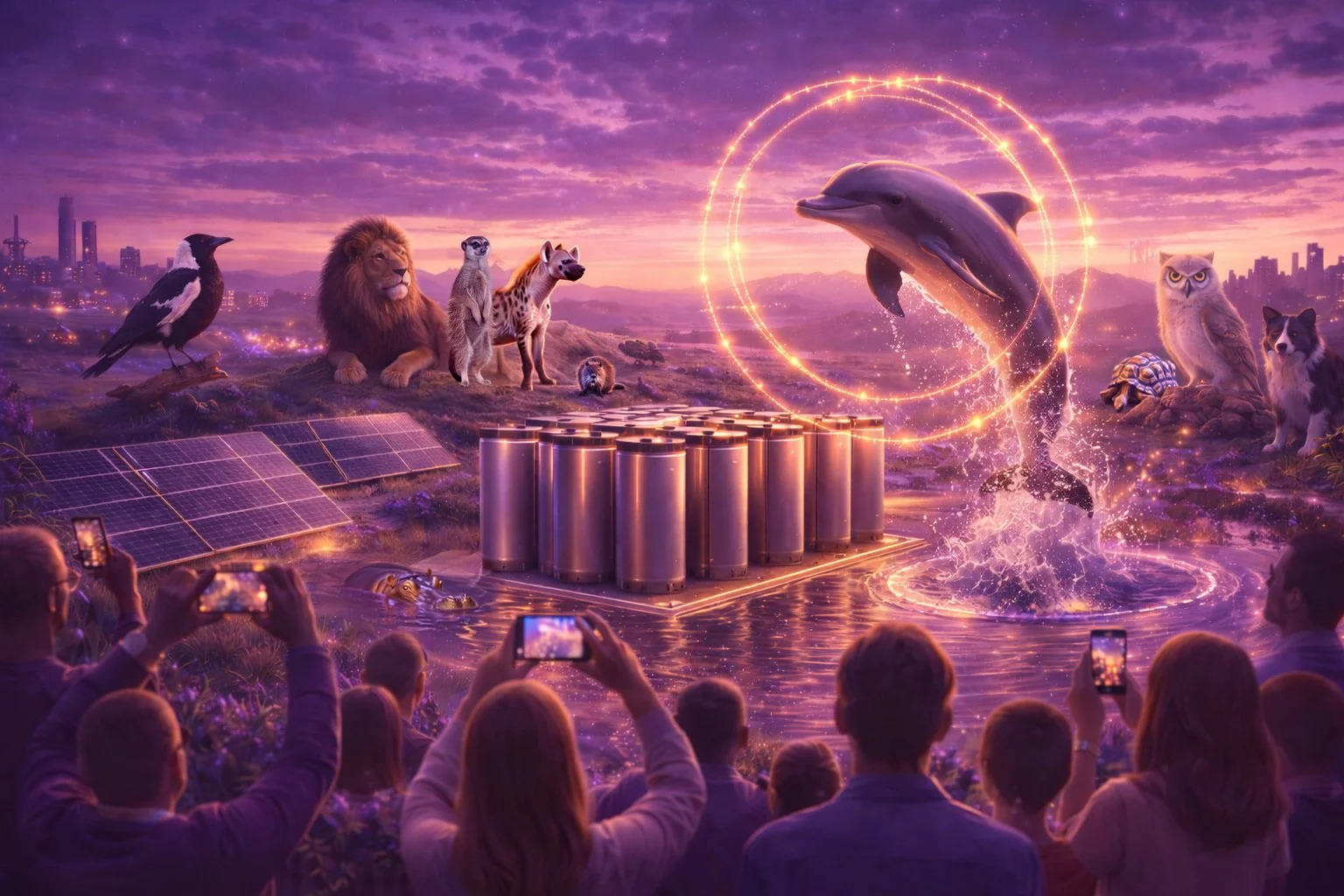
Look, on reflection, Hachiko should’ve been a dog. But I CBF changing it now.
Building a battery project means dealing with a lot of different animals. Developers, landholders, investors, lenders, EPCs, retailers, optimisers, lawyers - they all show up at different stages, they all want different things, and they all cost money. This is your field guide to who does what, when they appear, and why you should care. We’ve mapped each one to a zoo animal, because honestly, once you’ve met them all, it really does feel like a zoo.
For the purposes of this exercise, we’ll assume the zoo lives in the world of Unscheduled batteries. To learn more about what this means, have a butchers at our post on Scheduled Lite from last year.
So here we are
You’ve decided to build a battery project. Congratulations! You’re about to meet a lot of animals.
Some of them you’ll love. Some of them will cost you more money than you expected. Some will show up exactly when you need them, and some will arrive fashionably late clutching a very large invoice. A few may try to take ownership of your customer relationships while you’re not looking.
Together, they form an ecosystem. And like any ecosystem, removing one tends to make the whole thing collapse in ways you didn’t anticipate.
So think of this as your zoo map. You’ve paid about $500 for parking, walked through the turnstiles, grabbed a sausage from the sizzle, and now you’re standing at the entrance wondering where to start. Let’s go.
The project development life cycle has six stages: Originate → Develop → Fund → FID/FC* → Construct → Operate. Each animal appears at different points along the way, and some never leave.
*FID = Financial Investment Decision, FC = Financial Close. Both mean roughly the same thing, and refer to the moment when investors and developers jointly decide that a project investment will proceed. Contracts are subsequently issued to all suppliers, and a sh*tload of money is spent. It’s a big day for all parties.
🪶 The Magpie — Developer
Lifecycle: Originate → Develop → Fund → FID/FC → Construct → Operate
The magpie is first to arrive. It swoops in, spots something shiny - a grid connection opportunity, an under-served industrial estate, a substation with spare capacity - and claims it before anyone else has noticed.
This is the developer. They originate projects (hunt for them and knock on doors), secure land, lodge DA applications, and fight through the connection process. If you’ve ever dealt with a DNSP on a connection application, you’ll know why magpies are aggressive. You sort of have to be.
In the C&I battery world, developers come in two flavours. You’ve got your big distributed energy platforms backed by infrastructure funds with serious capital, and your humble EPCs evolving into funded BESS businesses for the first time. The latter typically have ambitions to evolve into the former. Both need software, both need market access, and both are growing fast. That’s the beauty of this market.
The magpie is the one that makes the whole zoo exist. Without it, nothing gets built.
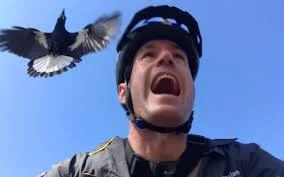
Have you heard Karl Pilkington’s story about his magpie Maggie?
🐻 The Wombat — Landholder / End Customer
Lifecycle: Originate → Develop → Operate
The wombat was here before the magpie showed up, and it’ll be here long after the hyena has issued their last invoice. It digs in, owns the burrow, and isn’t going anywhere. This is the landholder - the person or business whose site makes the whole project possible.
The wombat is arguably the most important animal in the zoo, because without a site, there is no project. And the best projects are the ones that give the wombat something simple, valuable, and easy to understand - then let everyone else absorb the complexity around them.
Wombats come in two flavours. The first is an energy consumer - a commercial & industrial customer with an existing electricity load. They sign a Power Purchase Agreement (PPA)/value-sharing agreement with the developer and benefit directly from the energy the battery and solar system produce. Lower bills, demand charge savings, backup power - whatever the value proposition, it needs to be clear and tangible. The wombat doesn’t care about dispatch intervals or FCAS markets. It cares about its power bill going down, and earning predictable returns from its land.
The second flavour is a land or roof space provider. They’re not consuming the power - they’re simply leasing space (land, rooftop, car park) to the developer, who establishes a new connection for the battery. The wombat gets a lease payment, the developer gets a site. Clean transaction.
Either way, the wombat’s experience needs to be straightforward. The moment you start explaining value stacks and merchant revenue to a warehouse owner, you’ve lost them. Keep it simple for the wombat, and let the rest of the zoo handle the complexity.
🦉 The Owl — Feasibility Platform
Lifecycle: Originate → Develop
Before anyone writes a cheque, someone needs to answer the question: "Is this project actually worth building?"
Enter the owl. Forward-looking, sometimes wise, occasionally wrong. The owl runs revenue models, crunches tariff data, stress-tests price forecasts, and produces the numbers that everyone downstream relies on. There are a few well-known feasibility tools in the NEM — you probably already know which ones. No matter who you choose, it’s important to make sure that the market price projections are reliable.
Here’s where it gets spicy. We have seen a lot of business cases floating around the market showing $500k–$900k/MW/year in combined energy and FCAS revenue over the lifetime of a project (~15 years). At today’s battery capex, that’s a 2-4 year payback. If those numbers were real and durable, everyone would be building batteries. So what’s the catch?
Usually, a stack of heroic assumptions hidden in the small print that customers may not read. The optimism dial gets quietly turned to 11 to get a deal over the line. A project champion stakes their credibility on it. The asset gets built. The real dollars don’t match the forecast. The caveats come out. "The market’s moved!" Has it? It was never near your forecast to begin with.
The worst part? Some of these projects have actually been approved. Customers have been led down the garden path by "trusted partners" with "proven track records in the industry", but the promises fall flat. This isn’t just about credibility. It’s about ethics. Energy is a knowledge and trust-based game. We need to hold ourselves to higher standards.
It’s not all the owl’s fault, though. People using the owl need to do the right thing. Proper feasibility platforms show ranges and downside risk, and encourage you to get bankable price forecasts to use within them. If your owl is only telling you good news, find a new owl, or get someone to help you keep the first owl honest.
🦁 The Lion — Equity Investor
Lifecycle: Fund → FID/FC
The lion takes the biggest risk for the biggest reward. It provides the equity capital that makes a project go ahead, and in return, expects chunky returns. We’re talking superannuation funds, private equity, infrastructure investors — the big cats. They take a bet on the merchant market alongside the developer.
The interesting dynamic in the NEM now is that lions are increasingly comfortable writing very large cheques for portfolios of smaller assets rather than single utility-scale assets. Why? Better diversification, quicker time to revenue, and lower development risk. In the last couple of years, we’ve seen multiple $100m-$2b commitments from serious institutional investors backing distributed battery developers. These are not exploratory bets. These are fund-sized allocations with decade-long horizons.
But here’s the thing — lions don’t just hand over money. They need evidence that the portfolio will perform. That means bankable software, proven optimisation, transparent benchmarking. If the magpie can’t show the lion that it’s consistently hitting market-leading value capture rates on existing assets, that next tranche is going to be a tough conversation.
The sausage sizzle at FID is the lion’s party. Everyone else is just a bystander.
🐢 The Tortoise — Debt Provider
Lifecycle: Fund → FID/FC
Where the lion roars, the tortoise plods. Debt providers — banks, green lenders, infrastructure debt funds — are cautious by nature. They need security. They need contracted revenue. They need a very clear picture of downside risk before they’ll lend you a cent.
For Unscheduled BESS, the tortoise is still working out how comfortable it is. Debt markets for distributed batteries are immature compared to utility-scale renewables, and the tortoise knows it. It wants an experienced asset owner with no insolvency risk, a track record of optimisation performance, and a long-term contract that provides revenue certainty. In the NEM (arguably the world’s most volatile commodity market) with a small asset, this can be a challenge.
The tortoise always gets there. It just takes a while. And it gets pretty expensive like — legal fees, due diligence fees, independent engineer reports, model audits — all before a single dollar is drawn. Welcome to project finance.
🦛 The Hippo — Retailer
Lifecycle: Develop → Fund → Operate
The hippo is a slow and lumbering beast that can move surprisingly quickly when it has enough momentum. Don’t be fooled by the docile appearance — hippos are one of the most dangerous animals in the zoo, and retailers are no different.
For Unscheduled BESS, the retailer is the entity that provides wholesale market access if the developer doesn’t have (or doesn’t want) its own market licence. The hippo handles settlement, billing, and regulatory compliance. Some hippos will also provide risk management — capping your downside exposure in exchange for a cut of the upside.
The hippo is usually also the counterparty on tolling deals, where a retailer or trader pays you a fixed amount per MW per year in exchange for dispatch rights over your battery. Sounds great on paper. The catch is that the retailer usually needs a lot of comfort that you’re actually going to turn up when called, which means director’s guarantees, parent company guarantees, some sort of guarantee. And fair enough; if there’s a major market event and they’re owed millions on a single day, they’ll want to know you’re good for it.
The hippo can become a chameleon in that they change colour to suit the contract, but once they’ve gripped on, good luck getting them to let go. The animal analogy falls away completely here but they’re also your biggest asset in a portfolio structuring exercise alongside the dolphin (whoa there’s the animal analogy again). Animal or no animal, make sure you choose wisely.
The thing about hippos is they’re territorial. Some want to own your customer relationship and take a revenue share with minimal transparency. You hand them your site, they handle everything, and in return you get a monthly statement that tells you almost nothing about how the money was actually made. Not cool. Others are happy to sit in the background as a service provider while you remain the face of the deal.
The difference matters enormously. If you’re a developer who spent years building customer relationships, the last thing you want is a hippo wading in and claiming the waterhole as its own. We’ve heard this from developer after developer — they searched for months for an alternative hippo before they found one that didn’t require handing over their customers.
Check the small print. Seriously. And for a bit of fun, check out “Hippopotenuse”.
🦫 The Beaver — EPC Contractor

I bet this beaver pays its invoices late
Lifecycle: FID/FC → Construct
The beaver builds things. That’s it. That’s the whole job.
OK fine, it’s a bit more nuanced than that. EPCs (Engineering, Procurement & Construction contractors) are responsible for designing, procuring, and constructing the physical battery system. They select hardware, manage civil works, handle electrical installation, and commission the site. A good beaver is worth its weight in gold.
What’s really interesting right now is that the entire commercial solar installer ecosystem is going through a forced evolution — from turnkey solar-only EPCs into sophisticated distributed energy businesses. Solar margins are collapsing. Customers need firmed renewables. Batteries are essential. But battery projects are extremely hard to fund and build without standardised site integration, revenue certainty, and portfolio-level market tools.
For EPCs, the value proposition of adding batteries is enormous — a battery project can increase the transaction value significantly compared to solar-only. But they need to figure out optimisation, market participation, and ongoing revenue generation, which is a whole different game to bolting panels on a roof.
Magpies have often evolved from a Beaver. Wow, this is becoming really funny. I spent 12 years living in the UK so can’t read “Beaver” without laughing. Hehehe. Beaver beaver beaver.
(Also, if you haven’t already or even if you have, watch Chris Kamara comparing Spurs to beavers. It’s brilliant.)
Anyway, I digress.
Magpies understand the world of the beaver very well, and they don’t want to give margin away unnecessarily. What this means is that the traditional beaver business model doesn’t work well for big portfolio rollouts, and it puts pressure on their business in most projects.
The beaver is evolving. Fast. Don’t be surprised to see them either all become magpies or disappear completely over the years ahead.
🦡 The Meerkat — O&M Contractor
Lifecycle: Construct → Operate
The meerkat is always watching. Head up, scanning the horizon, ready to react the moment something looks wrong. This is your Operations & Maintenance contractor — the team responsible for monitoring the asset and keeping it running after the beaver walks off (or the magpie flies away from) site.
O&M covers everything from routine maintenance and warranty management to fault response and performance monitoring. A good meerkat spots a problem before it becomes expensive. A great meerkat has a spare part on the shelf before you knew you needed it. The best meerkats know how to work with a dolphin.
The O&M world for C&I BESS is still immature. Beavers think they can do it but underestimate the complexity. A lot of the meerkats in the market today were trained on solar, and batteries are a different beast. Thermal management, cell degradation, capacity fade, firmware updates, inverter cycling — it’s more complex than most people expect. And it matters, because poor O&M directly impacts your revenue. Again, choose wisely.
🐬 The Dolphin — Optimisation Platform
Lifecycle: Develop → Fund → FID/FC → Construct → Operate
The dolphin is fast, intelligent, and navigates complex environments that would drown anything less capable. This is your optimisation platform — the software layer that decides what your battery should do, at least every five minutes, across every revenue stream, transparently, in real time.
As we have said elsewhere, it is worth remembering that having an active market-exposed BESS means you live and die by the decisions you make with your BESS. Wholesale arbitrage, FCAS, network tariff optimisation, PPA obligations — there’s a stack of services that batteries can provide, and big prizes go to the person who can co-optimise across all of them simultaneously.
Here’s the uncomfortable truth: most optimisation platforms in the Unscheduled BESS market today are simply not fit for purpose. They were either built for utility-scale assets and then awkwardly repurposed, or built for the C&I market and perform woefully. They’re expensive, rigid, opaque, and can’t handle the diversity (not an old, old wooden ship) that the modern BESS market throws at you. AC-coupled, DC-coupled, with load, without load, FCAS-enabled, FCAS-not-enabled, Energex, SAPN, Endeavour, all the other DNSPs — the dolphin needs to handle all of it.
And pricing matters. A lot. We’ve seen real-world examples where software fees alone eat up more than 70% of monthly revenues. When your controls provider, optimisation platform, and base monitoring charges eat up that much of your returns, you don’t have a business case. You have a charity. If your software stack costs more than 10% of total annual revenue before you’ve even paid for insurance and O&M, something has gone very wrong.
The best dolphins prove their worth with demonstrable market-leading performance, transparency, and a calm, kind ear to help you navigate the crazy ocean that is battery project ownership. OK, it’s now temporarily an ocean and not a zoo. This is a free blog, alright? What’re you going to do, sue me?
🐕 The Border Collie — Controls Provider
Lifecycle: Construct → Operate
The border collie does not stop. Ever. It herds everything, reacts instantly, and will absolutely lose its mind if something is out of place. This is your controls provider — the layer that sits between the optimisation brain and the physical battery.
The border collie handles real-time command translation, hardware integration, alarm management, and failsafe protocols. When the dolphin says "charge at 500kW for the next interval," it’s the border collie that makes sure the inverter actually does it. And when the inverter doesn’t do it — because the comms link dropped or the DNSP issued a curtailment signal — the border collie escalates.
There are a handful of controls providers in the NEM working across Unscheduled BESS. Their costs vary depending on capability, and can add up fast across a portfolio. Some of them are far more expensive than others for what they deliver — we’ve had some spirited conversations about this over the years. Make sure you choose one that gives you what you need, not a bunch of extra shite that costs money but adds no value to your life.
A good border collie is invisible. You only notice it when something goes wrong and it isn’t there.
🦴 The Hyena — M&A / Transaction Lawyers
Lifecycle: Fund → FID/FC (and sometimes Operate, when portfolios change hands)
The hyena shows up when there’s money on the table. It circles the deal, laughing, and leaves with the biggest invoice anyone’s ever seen.
We jest. Mostly. Transaction lawyers are essential to getting deals done. They draft the binding term sheets, the PPAs, the EPC contracts, the O&M contracts, the shareholder agreements, the debt facility agreements, and every other piece of paper that sits between the idea of a battery project and the reality of one. They also make introductions because they know literally everyone, which is an underrated benefit of finding the right hyena.
In the world of Unscheduled battery portfolios, the legal complexity is significant. You’re dealing with the National Electricity Rules (stemming from the National Electricity Law), AEMO registration requirements, network connection agreements, retail market frameworks, PPAs, and increasingly, cross-border structures as international capital enters the space. It’s not cookie-cutter, and anyone who tells you it is should be someone you never talk to again.
The hyena’s favourite moment is Financial Close. That’s when all the docs come together, all the conditions precedent get ticked off, and the champagne flows. For about ten minutes. Then the hyena invoices, which means you probably should’ve bought sparkling wine and a pipe of Pringles instead of champers.
Closing time — putting the zoo together
So there you have it. Eleven animals, six lifecycle stages, and a lot of moving parts. Here’s how they map:
Originate: The Magpie (developer) swoops on opportunities. The Wombat (landholder) is already there, owning the burrow.
Develop: The Owl (feasibility) crunches the numbers. The Hippo (retailer) raises its hand. The Dolphin (optimisation) gets involved early to support where needed.
Fund: The Lion (equity) and the Tortoise (debt) show up with capital. The Hyena (lawyers) starts drafting.
FID/FC: Everyone’s at the sausage sizzle. Contracts get signed. Setup fees get paid. The Beaver (EPC) sharpens its tools.
Construct: The Beaver builds. The Border Collie (controls) starts commissioning. The Meerkat (O&M) watches from the wings.
Operate: The Dolphin co-optimises across all revenue streams. The Meerkat keeps everything running. The Border Collie never sleeps. The Wombat enjoys a lower power bill (or a lease payment). The Magpie’s already looking for the next site.
The most common mistake we see is treating these stakeholders as sequential. They’re not. A good magpie is talking to the dolphin and the hippo while still in the develop phase, because the decisions you make early — site configuration, market access approach, PPA structure — cascade through everything that follows. If you wait until FID to think about optimisation, you’ve already locked in constraints that limit your revenue for at least the very crucial first year of your project’s life (bad idea).
It’s also worth noting that not every animal is a separate business. In practice, some of these roles overlap. An EPC might also handle O&M. Some developers are vertically integrated enough to be the magpie, the hippo, the lion, and the tortoise all at once. And there are players in the market trying to bundle everything into a one-stop shop — though in our experience, the more hats one animal tries to wear, the harder it is to do any of them really well.
Specialisation matters, and you generally want the best dolphin, not a hippo that also dabbles in optimisation on the side. We have recently seen meerkats offering their own in-house dolphins. The zoo’s an interesting place, that’s for sure.
I don’t know how many gigawatts a data centre had to use to make this, but it was worth it.
40 x 5MW projects are theoretically easier and faster to deliver than 1 x 200MW project. That’s the Unscheduled advantage. But it also means a lot of complexity to coordinate. The portfolio approach only works if all the animals give you what you need to make the economics work, and the dolphin can handle that diversity without breaking a sweat.
We built Hachiko because nobody else was building the platform that Unscheduled battery portfolios, load or no load, actually need. Just good, reliable software, transparent market-leading performance, and most importantly, a team that actually understands the zoo. If you want to know what makes a good dolphin, just book in a time here.